
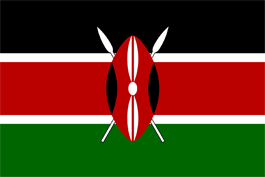
Situated in East Africa with an Indian Ocean coastline, Kenya covers approximately 580,000 km² and shares borders with Tanzania, Uganda, South Sudan, Ethiopia, and Somalia. The terrain spans coastal lowlands, fertile central highlands, the Great Rift Valley, and arid northern/eastern regions, leading to a population concentrated primarily in central and western areas.
Healthcare System in Kenya
Kenya maintains a devolved, mixed public–private healthcare system. The national Ministry of Health oversees national policy, regulation, capacity building, and national referral facilities, while the 47 County Health Departments directly manage local service delivery across community, primary, and county referral levels. Universal Health Coverage and primary healthcare reforms are currently being pursued through the Social Health Authority.
Cervical cancer burden and HPV in Kenya
In Kenya, cervical cancer is the second most common cancer among women and the leading cause of cancer-related deaths. Each year, around 5,200–5,800 women are diagnosed with cervical cancer and more than 3,200 die from the disease. About 9% of women in the general population are estimated to carry HPV 16/18, and these two types account for roughly 63% of invasive cervical cancers. HPV vaccination has been introduced but coverage remains low, leaving many girls and young women unprotected.

What we do in Kenya
Since 2015, ETiCCS has collaborated with Moi University and local partners to implement and evaluate novel cervical cancer screening approaches in rural regions. In the BMBF-funded project “Novel Concepts for Cervical Cancer Screening in Two Rural African Regions” (2014–2017), we established HPV testing (careHPV) and dual-stain cytology and introduced digital data management for cervical cancer screening. These activities laid the groundwork for ongoing efforts to integrate HPV-based screening and digital tools into routine care.

Department of Applied Tumor Biology
Institute of Pathology
Heidelberg University Hospital
Im Neuenheimer Feld 224,
69120 Heidelberg, Germany
Tel: +49 6221 56 4220
info@eticcs.org